
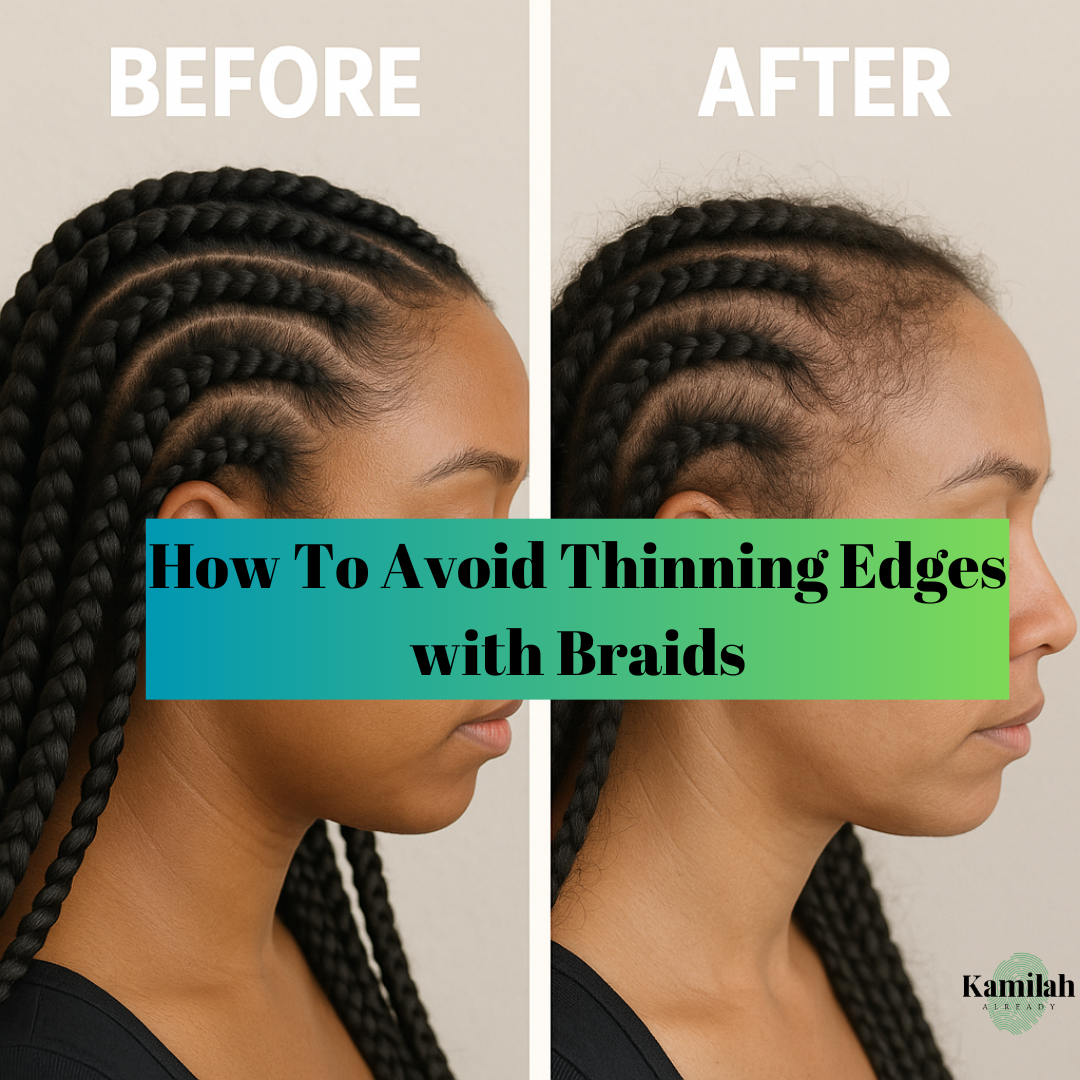
How To Avoid Thinning Edges with Braids: Protect Your Hairline Without Sacrificing Style
Braid Season Is Upon Us
Braids are a beautiful and versatile protective style, but if they're not installed and maintained properly, they can lead to one of the most frustrating hair issues: thinning edges. The delicate hairs around your hairline are especially vulnerable to tension, breakage, and traction alopecia. But the good news? You can rock braids and protect your edges. Here's how.
1. Start with a Healthy Foundation
Before installing braids, your scalp and hairline should be in good shape. Moisturize your scalp and edges regularly in the days leading up to your appointment, and make sure your hair is clean and well-conditioned.
Pro Tip: Use a lightweight, water-based scalp serum to prep your scalp and edges. Look for one that absorbs without leaving heavy buildup at your parts.
2. Communicate With Your Stylist
Don't be afraid to speak up. Let your stylist know that preserving your edges is a priority. Ask them to:
- Avoid tight braiding along your hairline.
- Leave out baby hairs or fragile edges.
- Use minimal tension, especially around the perimeter.
A good stylist will understand that healthy hair > tight braids.
3. Choose Edge-Friendly Styles
Not all braid styles are created equal when it comes to your hairline. Styles like knotless braids, cornrows with larger parts, or looser feed-in braids are gentler on edges than tiny, tight box braids or high-tension updos.
Avoid: Microbraids, heavy (super long) braid extensions, or anything that pulls too much on your temples or nape.
If you love long or heavy styles, keep the wear time shorter, ask for a looser hairline, and stay consistent with gentle daily scalp care while you wear them.
4. Don't Keep Braids In Too Long
Protective styles aren't meant to be permanent. Leaving braids in for more than 6 to 8 weeks can lead to buildup, matting, and edge thinning. As your hair grows, the weight of the extensions puts more stress on your new growth, especially around the edges.
5. Sleep Smart and Moisturize
At night, wear a satin or silk scarf to reduce friction on your edges. Hydration is also key, so apply a light, non-greasy leave-in every few days to keep your hairline supple and less prone to breakage.
6. Take a Break Between Installs
Give your scalp time to breathe between braid styles. Give your edges a rest with low-manipulation styles like mini-twists, bantu knots, or twist-outs, gentle scalp massages, and a lightweight daily scalp serum.
7. Know the Early Warning Signs
Soreness, itching, small bumps, flaky white buildup at the base of your braids, or scalp that looks pulled up like a tent can all be early signs of traction alopecia. If you notice them, loosen or take down the style, and see a dermatologist if they don't settle. Learn more in our guide to the early signs of traction alopecia.
For everyday care, the Edge Back Hair Serum is a lightweight, water-based, oil-free scalp serum designed to support fuller-looking edges over time with consistent use, without buildup or greasiness.
Individual results vary. Daily use is required for optimal results.
Your Edges Deserve Love
Edges are sensitive and sacred, so treat them with care! With the right techniques, products, and patience, you can enjoy braids and keep your hairline looking full and healthy.
Find out what's really behind your thinning
Take my 60-second hair quiz, and I'll send you a short email series that goes deeper on tension-related thinning at your edges and hairline.